Is Slite the Right Knowledge Base for Your Team?
Take This Quick Quiz to Find Out!
In today’s fast-paced project environments, understanding your tools is paramount for success, which is why we’ve compiled these comprehensive Slite FAQs. Slite, an advanced AI-powered knowledge management and documentation platform, directly addresses the persistent challenges of information silos and administrative overhead in project and product management.
Key Takeaways
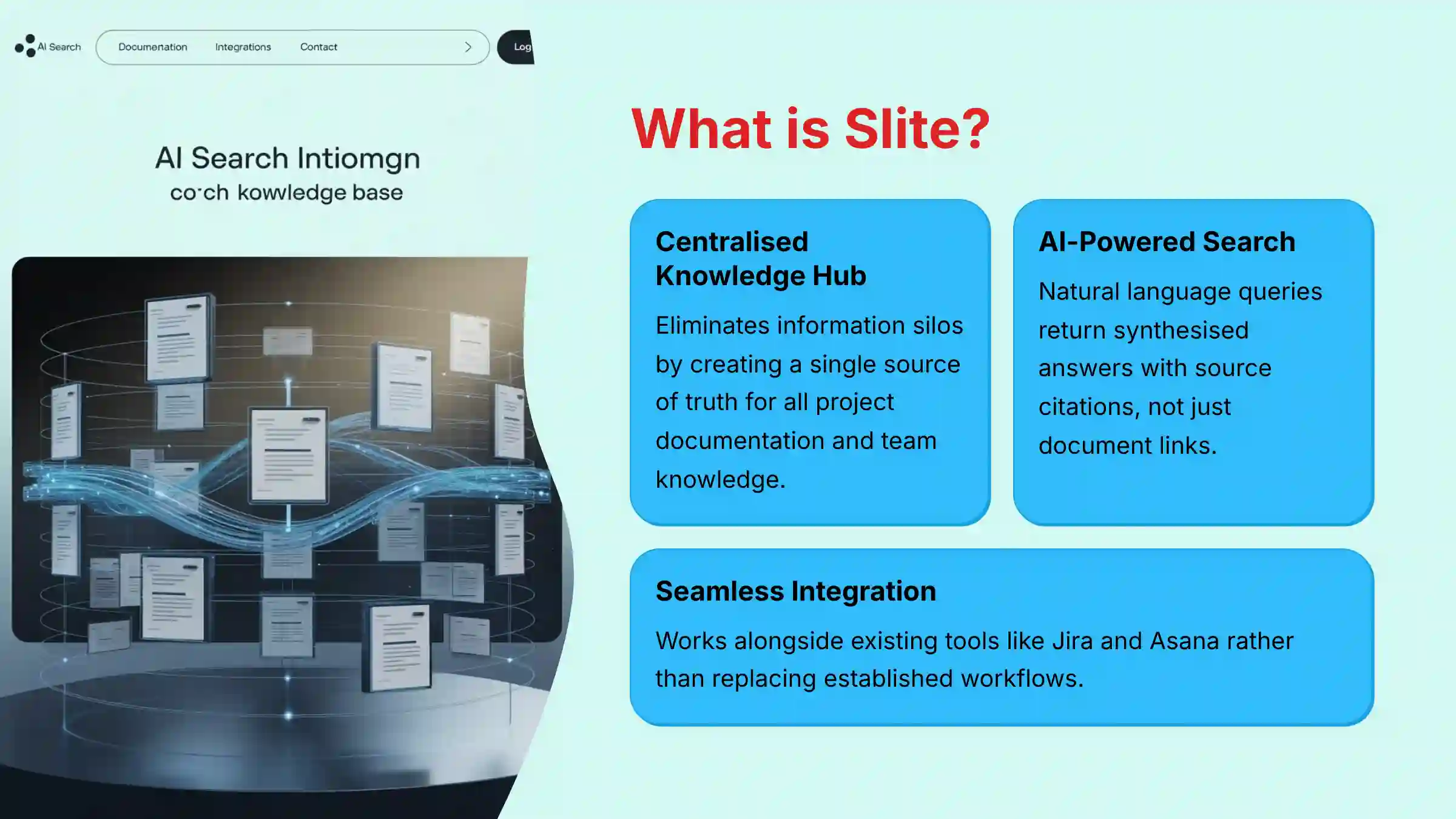
- AI-Powered Knowledge Management: Slite transforms scattered information into a centralized, searchable workspace with natural language AI queries
- Enterprise-Grade Security: SOC 2 Type II certification, GDPR compliance, and AES-256 encryption ensure robust data protection
- Productivity Advantage: Reduces information retrieval time by 60-70% while eliminating repetitive status meetings
- Seamless Integration: Complements existing project management tools rather than replacing them, minimizing workflow disruption
- Transparent AI Pricing: Bundled AI features within standard tiers eliminate usage-based cost unpredictability common with competitors
This guide serves as your definitive resource for navigating Slite’s capabilities, particularly as a key component within the broader landscape of AI for Execution & Collaboration tools. As project and product managers, you constantly seek solutions to boost team productivity and ensure project success. Here, we’ll delve into the practical applications of Slite’s AI, answering critical questions about its features, its impact on team collaboration, security standards, and cost-effectiveness.
You’ll gain clear insights into how Slite, a tool meticulously reviewed by experts like those at Best AI Project Hub, can streamline your workflows. We’ll explore its unique value proposition, distinguishing it from alternatives like Notion, and discuss its practical limitations, ensuring you make informed decisions for your team’s tech stack.
Our objective analysis is designed to empower professional decision-makers like you to cut through the marketing hype. We focus on real-world utility, including its robust security and compliance measures, to help you transform project management into a proactive, data-driven strategic advantage.
What is Slite and how does it transform project management workflows?
Slite is an AI-powered knowledge management and documentation platform specifically designed to eliminate information silos and reduce the administrative overhead that plagues modern project teams. Unlike traditional document management systems that create scattered files across folders, Slite functions as a centralized “single source of truth” where all project documentation, meeting notes, requirements, and team knowledge converge into one searchable, intelligent workspace.
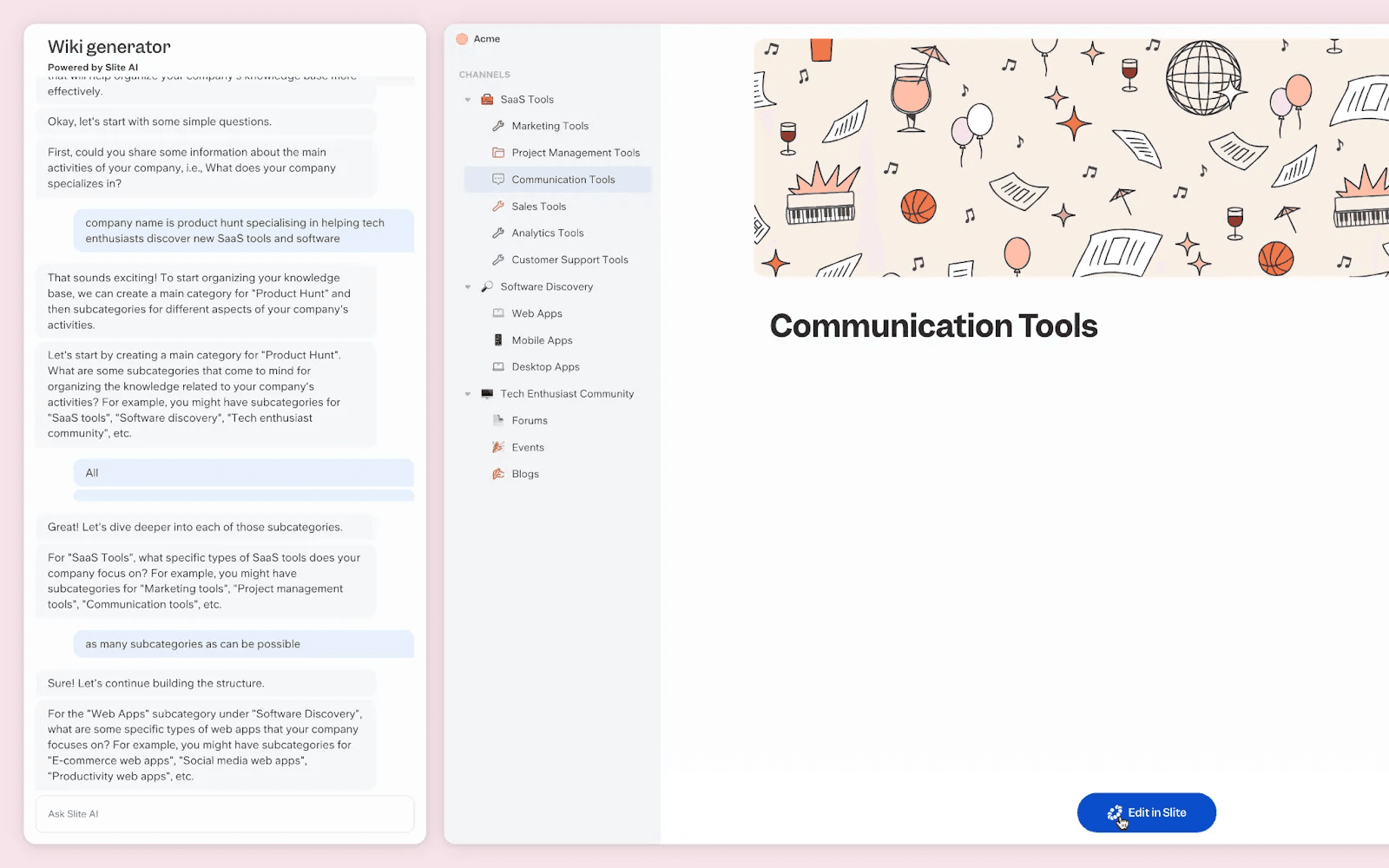
The platform’s core strength lies in its AI-driven approach to information retrieval and synthesis. Traditional project management often involves team members spending significant time hunting through emails, shared drives, and multiple tools to find context or answers. Slite’s “Ask” feature transforms this dynamic by allowing users to query their entire knowledge base using natural language and receive synthesized answers with source citations, rather than just document links.
For project and product managers, this represents a fundamental shift from reactive information management to proactive knowledge accessibility. Instead of repeatedly answering the same questions or directing team members to various documents, managers can ensure that critical project information is instantly discoverable through AI-powered search. This dramatically reduces context-switching time, minimizes meeting overhead for status updates, and allows teams to maintain focus on execution rather than information gathering.
The platform integrates seamlessly with existing project management ecosystems, working alongside tools like Jira, Asana, or Linear rather than attempting to replace them, making it an ideal complement to established workflow systems. This approach is detailed in our comprehensive Slite Review which examines the platform’s collaborative capabilities in depth.
How does Slite’s AI enhance team collaboration and execution in project environments?
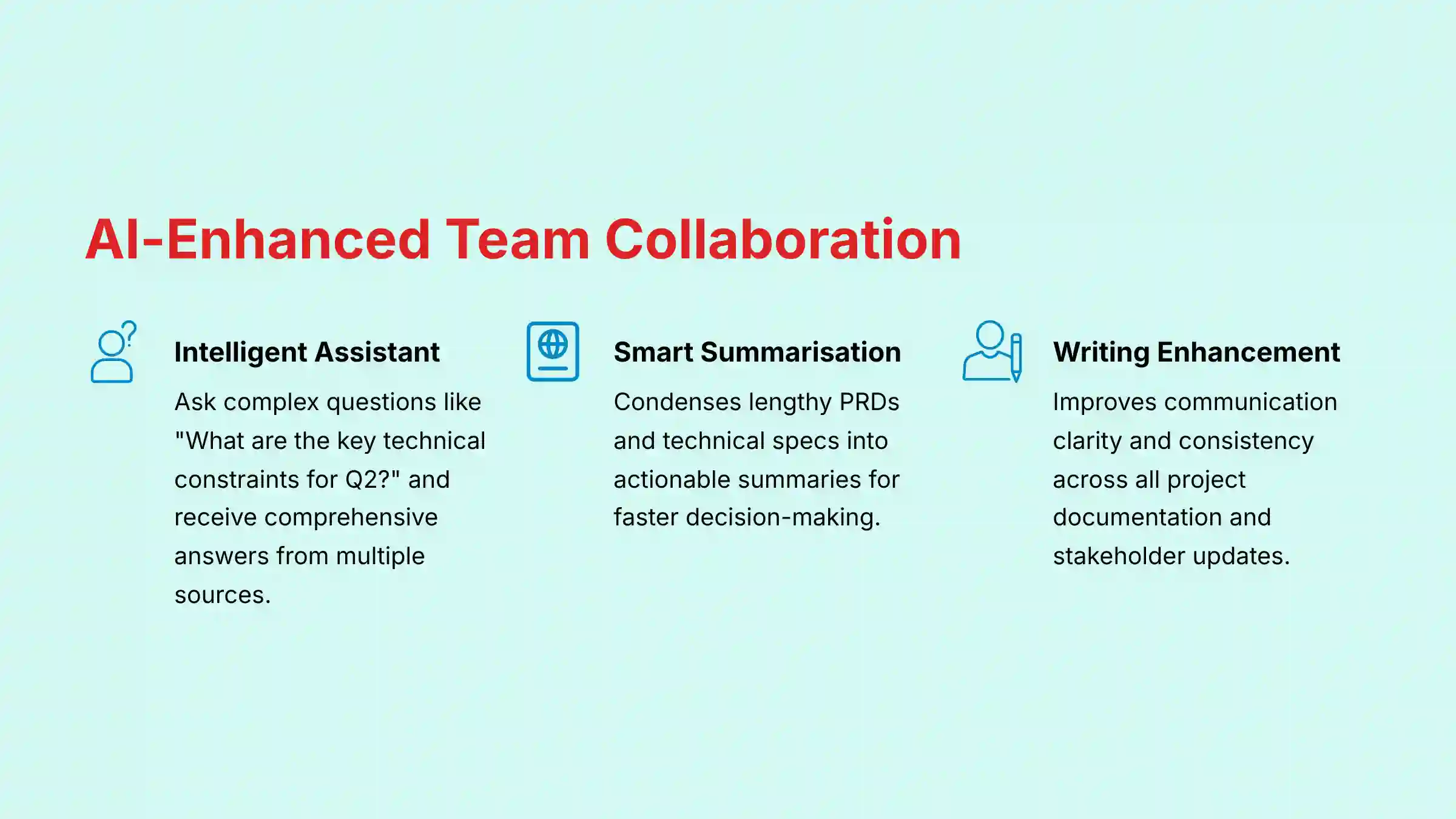
Slite’s AI capabilities are specifically architected to address the most common collaboration friction points in project and product management: information fragmentation, communication overhead, and knowledge transfer inefficiencies. The platform’s AI operates across three critical dimensions that directly impact team velocity and project success rates.
The flagship “Ask” feature functions as an intelligent project assistant that can instantly synthesize information across multiple documents, meeting notes, and specifications. For example, a product manager can ask “What are the key technical constraints for the Q2 feature release?” and receive a comprehensive answer drawn from engineering specs, stakeholder feedback, and previous planning documents, complete with source references for verification.
Slite’s AI-powered summarization capabilities tackle the challenge of information overload that commonly affects project teams. Long Product Requirements Documents (PRDs), extensive user research findings, or detailed technical specifications can be condensed into actionable summaries, allowing stakeholders to quickly understand key points without reading through dozens of pages. This feature proves particularly valuable for cross-functional teams where members need context from areas outside their expertise.
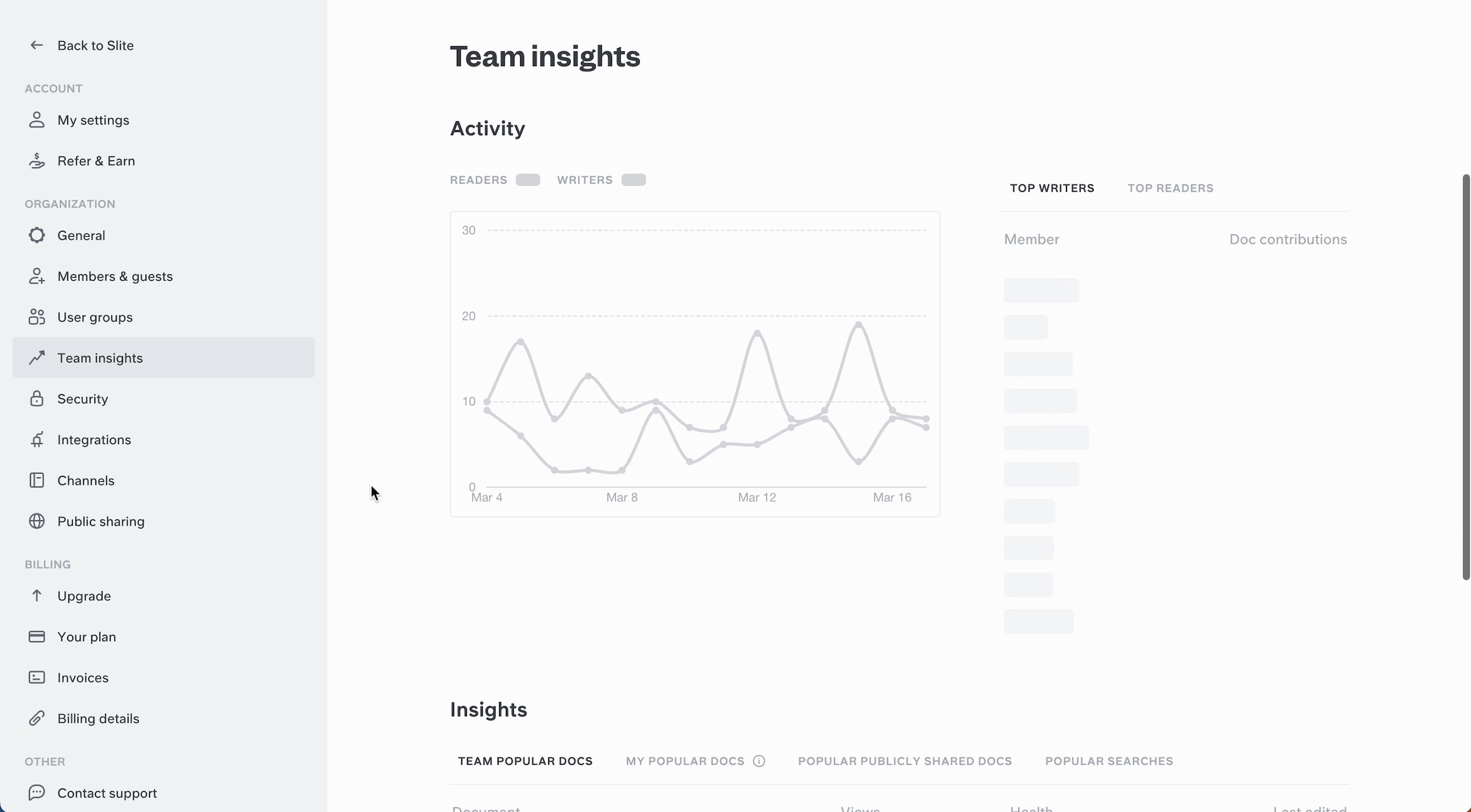
The platform’s intelligent writing assistance ensures that all project communications maintain professional clarity and consistency. Whether drafting sprint retrospectives, stakeholder updates, or technical documentation, the AI helps improve readability, fix grammatical issues, and adapt tone appropriately for different audiences. This consistency reduces misunderstandings and improves overall project communication quality.
These AI features combine to create a measurable impact on project efficiency: reduced time spent in status meetings, faster onboarding for new team members, and improved decision-making through better access to historical project context and decisions. For teams looking to explore comprehensive alternatives, our guide to Slite Top Alternatives and Competitors provides valuable comparison insights.
Slite vs Notion for project management: Which platform delivers better ROI for product teams?
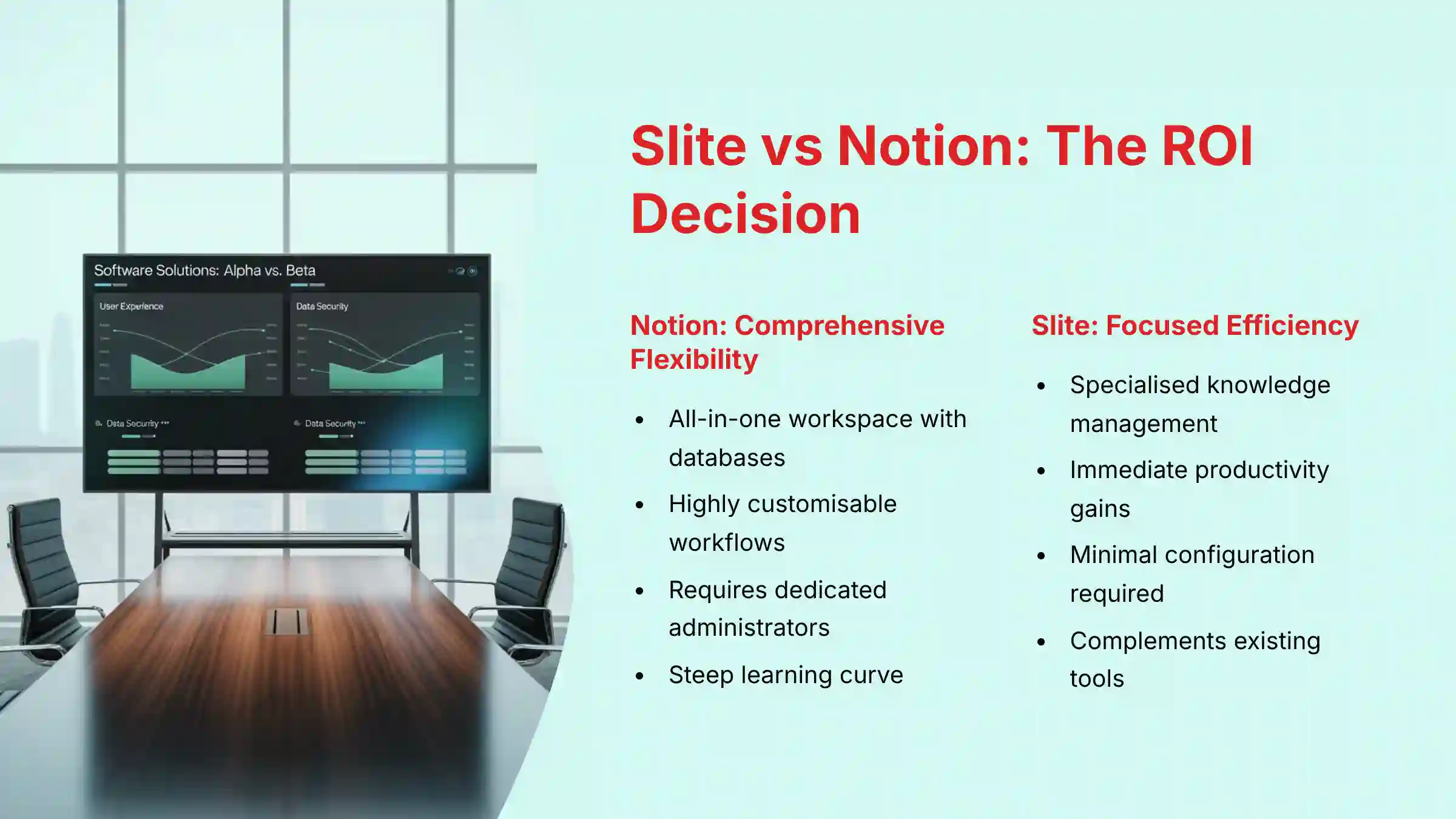
The choice between Slite and Notion represents a fundamental decision about team workflow philosophy: comprehensive flexibility versus focused efficiency. Understanding this distinction is crucial for project and product managers evaluating knowledge management solutions for their teams.
Notion positions itself as an all-in-one workspace that combines databases, project tracking, documentation, and task management into a highly customizable platform. Its strength lies in its ability to create complex, interconnected systems where teams can build custom workflows, roadmaps, and project tracking systems. For product teams that want to consolidate multiple tools into a single platform and have the technical expertise to configure complex database relationships, Notion offers unparalleled flexibility.
However, this power comes with significant overhead: teams often require dedicated “Notion administrators” to set up and maintain these systems, and the learning curve can be steep for non-technical team members.
Slite takes a deliberately focused approach, excelling specifically at knowledge management and documentation while integrating with existing project management tools rather than replacing them. Its AI-powered “Ask” feature and streamlined interface prioritize ease of adoption and immediate productivity gains. The platform requires minimal configuration and can deliver value from day one without requiring extensive setup or training.
For project managers, the ROI calculation often favors Slite when teams already have established project management workflows in tools like Jira, Linear, or Asana. Slite complements these systems by providing the “second brain” for documentation, meeting notes, and institutional knowledge without disrupting existing processes. Notion’s Q&A feature provides similar AI-powered search capabilities, but the platform’s complexity can create adoption barriers that reduce the actual utilization of these advanced features across the entire team.
The decision ultimately depends on team composition and existing tool stack: Notion for teams seeking a unified workspace, Slite for teams prioritizing documentation efficiency and knowledge accessibility. For deeper insights into maximizing Slite’s potential, explore our comprehensive Slite Tutorials and Usecase guide.
What security and compliance standards does Slite meet for enterprise project management?
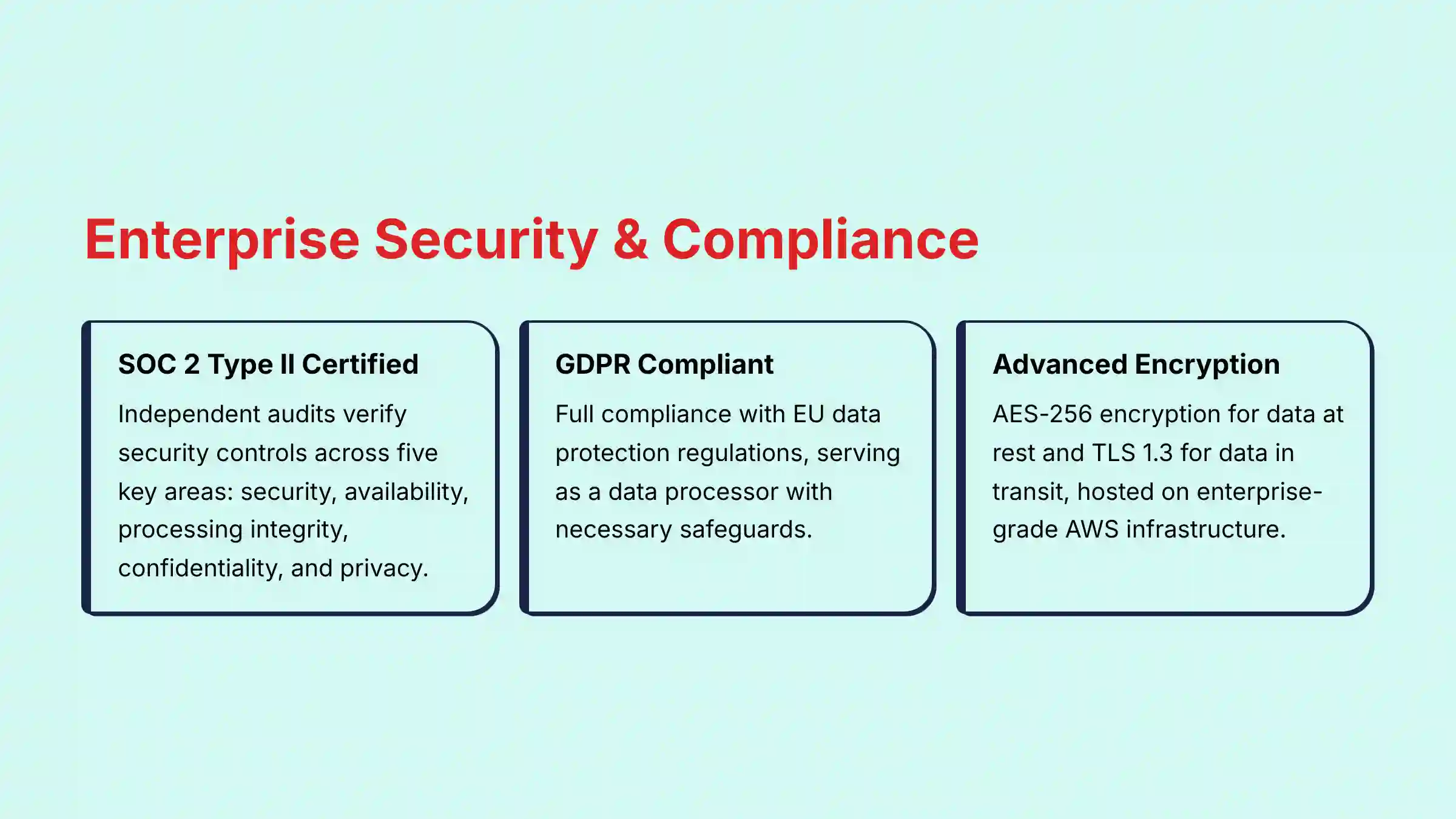
Slite implements enterprise-grade security measures specifically designed to protect sensitive project data, strategic roadmaps, and confidential product information that are central to project and product management workflows. The platform’s security framework addresses the critical requirements that IT leaders and compliance teams evaluate when assessing knowledge management solutions for business-critical applications.
The platform maintains SOC 2 Type II certification, which represents the gold standard for SaaS security compliance. This certification involves ongoing, independent audits that verify Slite’s implementation of controls across five key areas:
- Security protocols and access controls
- System availability and uptime guarantees
- Processing integrity for data handling
- Confidentiality safeguards for sensitive information
- Privacy protection for personal data
For project managers handling sensitive customer data, competitive intelligence, or strategic planning documents, this certification provides assurance that the platform meets rigorous, independently verified security standards.
Slite fully complies with GDPR requirements and serves as a data processor under the regulation, implementing necessary safeguards for handling personal data of EU citizens. This compliance extends to all project-related data that might contain personal information, such as customer feedback, user research, or stakeholder communications.
Technical security measures include:
- AES-256 encryption for data at rest
- TLS 1.3 encryption for data in transit
- Granular access controls with least-privilege principles
- Multi-factor authentication support
- Regular security audits and penetration testing
Regarding AI data usage, Slite explicitly states that customer data is not used to train their AI models, addressing a critical concern for teams handling proprietary product information or competitive intelligence. However, project managers should always verify this policy in writing as part of their vendor evaluation process and ensure it’s explicitly covered in their service agreement.
All infrastructure is hosted on Amazon Web Services (AWS), leveraging enterprise-grade physical security and network protections that meet the requirements of highly regulated industries. For teams seeking similar security standards across their entire AI toolchain, our comprehensive guide to Best 10 AI Document & Knowledge Collaboration tools for Project & Product Managers provides security-focused comparisons.
What are the practical limitations of Slite’s AI for project management workflows?
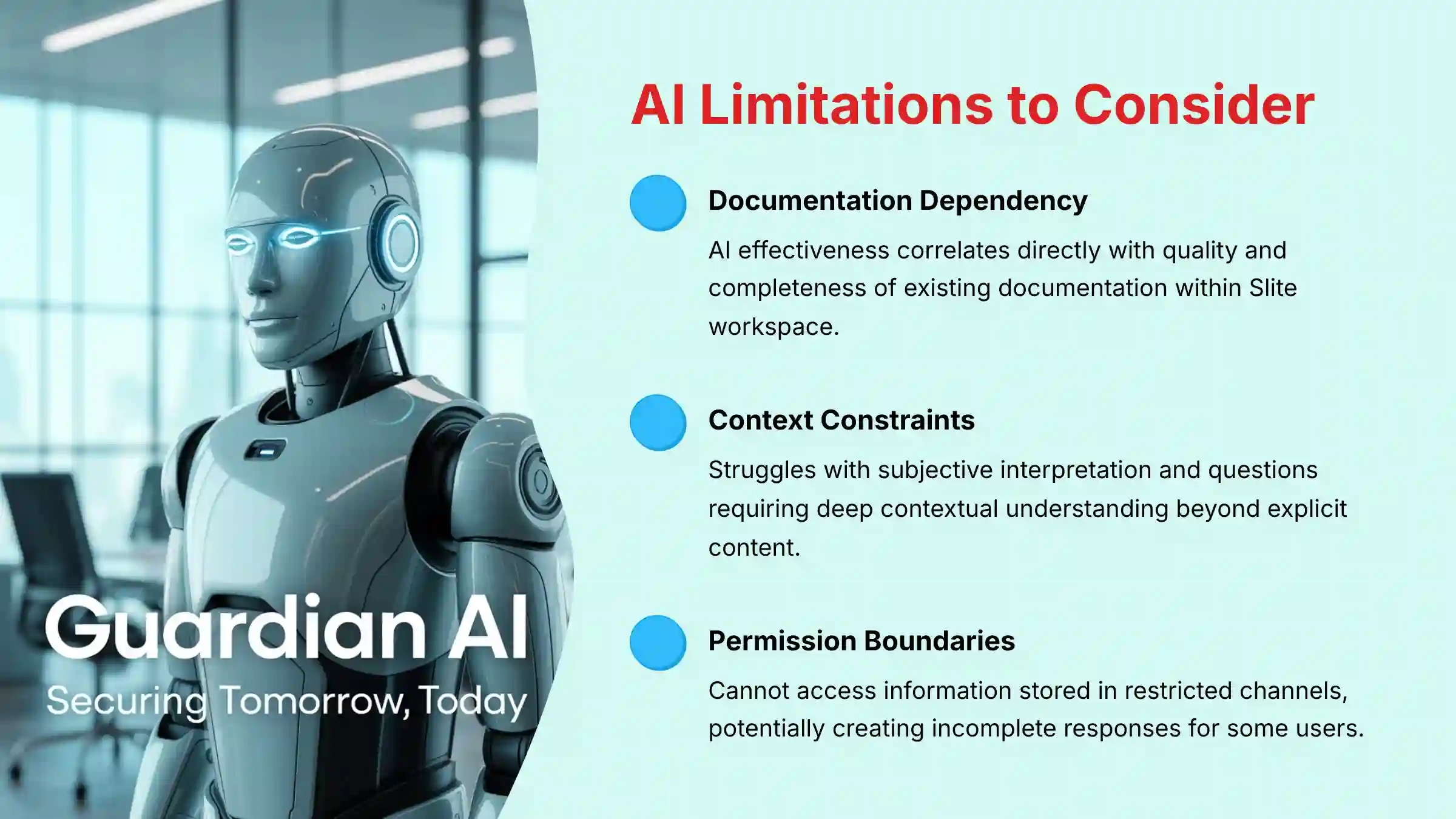
While Slite’s AI capabilities offer significant advantages for project and product management, understanding its limitations is essential for setting realistic expectations and implementing the platform effectively within existing workflows. The AI’s effectiveness is directly correlated with the quality and completeness of the underlying documentation, making it a powerful amplifier of good knowledge management practices rather than a solution for poor documentation hygiene.
The primary constraint is that the AI can only synthesize information that exists within the Slite workspace. If critical project decisions, technical specifications, or stakeholder feedback are documented elsewhere or remain undocumented, the AI cannot provide comprehensive answers. This limitation becomes particularly apparent in organizations where knowledge is scattered across multiple platforms or exists primarily in informal communications.
Context and nuance limitations present challenges for complex project scenarios. While the AI excels at retrieving factual information and synthesizing explicit content, it may struggle with questions requiring subjective interpretation or deep contextual understanding. For example, asking “What is the team’s sentiment about the current sprint velocity?” might not yield accurate insights if the underlying documentation doesn’t explicitly capture team feedback or mood indicators.
Permission-based knowledge gaps can create incomplete responses when team members ask questions about information stored in channels or documents they cannot access. This is particularly relevant in project environments where sensitive information is compartmentalized based on roles or security clearances.
Complex multi-step reasoning beyond simple information synthesis can challenge the AI. Questions requiring:
- Logical deductions across multiple data points
- Comparative analysis across different frameworks
- Predictions based on historical patterns
- Strategic recommendations requiring business context
These types of queries may produce less reliable results than straightforward factual questions.
To maximize AI effectiveness, project teams should implement rigorous documentation practices, utilize Slite’s verification features to maintain content accuracy, and train team members to ask specific, well-structured questions that align with the AI’s strengths in information retrieval and synthesis.
How does migrating from Confluence or Notion to Slite impact existing project workflows?
Migrating project documentation and knowledge bases to Slite involves both technical data transfer and workflow adaptation considerations that project managers must carefully plan to minimize disruption and maximize adoption success. Slite provides dedicated import tools and migration support specifically designed to handle enterprise-scale transitions from major platforms.
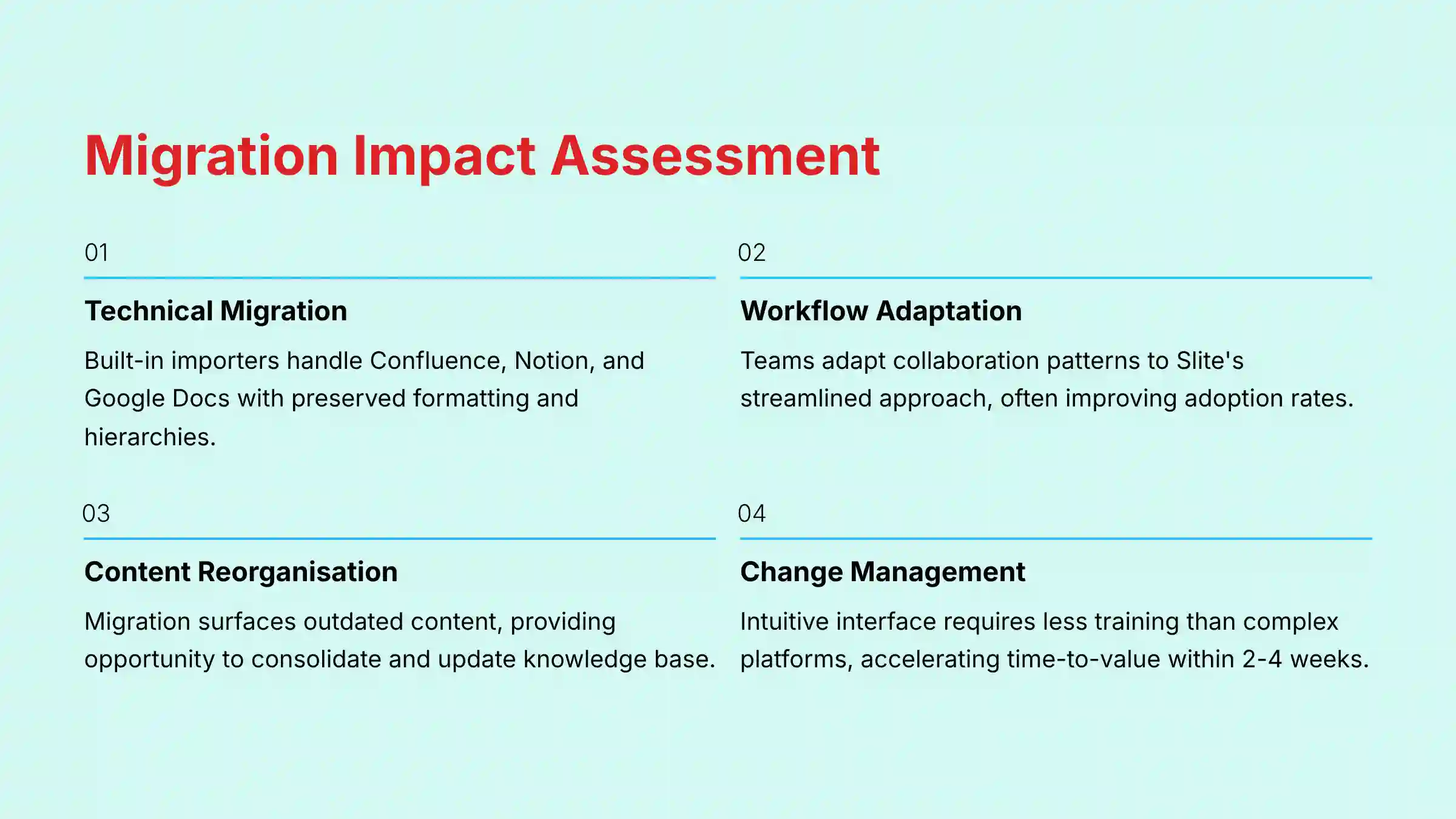
The technical migration process leverages Slite’s built-in importers for Confluence, Notion, Google Docs, and other common platforms. For Confluence migrations, the process typically involves:
- Exporting complete spaces as HTML files
- Using Slite’s importer to parse and recreate page hierarchies
- Preserving formatting and embedded content structure
- Maintaining internal linking relationships where possible
Notion migrations handle both page content and database structures, though complex database relationships may require post-migration reorganization to align with Slite’s channel-based architecture.
Workflow impact assessment should focus on how teams currently access and update information. Teams heavily dependent on Confluence’s commenting systems or Notion’s database filtering capabilities may need to adapt their collaboration patterns to Slite’s more streamlined approach. However, many project teams find this simplification actually improves adoption rates among team members who previously found their existing systems too complex or overwhelming.
Content reorganization often provides an opportunity to improve information architecture. The migration process naturally surfaces:
- Outdated documentation requiring updates
- Duplicate content that can be consolidated
- Knowledge gaps that need addressing
- Information hierarchies that can be simplified
Project managers should budget time for content review and verification using Slite’s built-in content validation features.
Integration continuity requires evaluating how the new platform will connect with existing project management tools. Slite’s API and integration ecosystem typically provides better connectivity with modern project management platforms than legacy wiki systems, potentially improving overall workflow efficiency.
Change management considerations include training team members on Slite’s AI features and establishing new documentation standards that leverage the platform’s strengths. Teams often report that Slite’s intuitive interface requires less training than complex platforms like Notion, accelerating time-to-value.
The migration timeline varies based on content volume and complexity, but most project teams can complete the transition within 2-4 weeks while maintaining operational continuity.
What is Slite’s pricing structure and how do AI features impact cost-effectiveness for project teams?
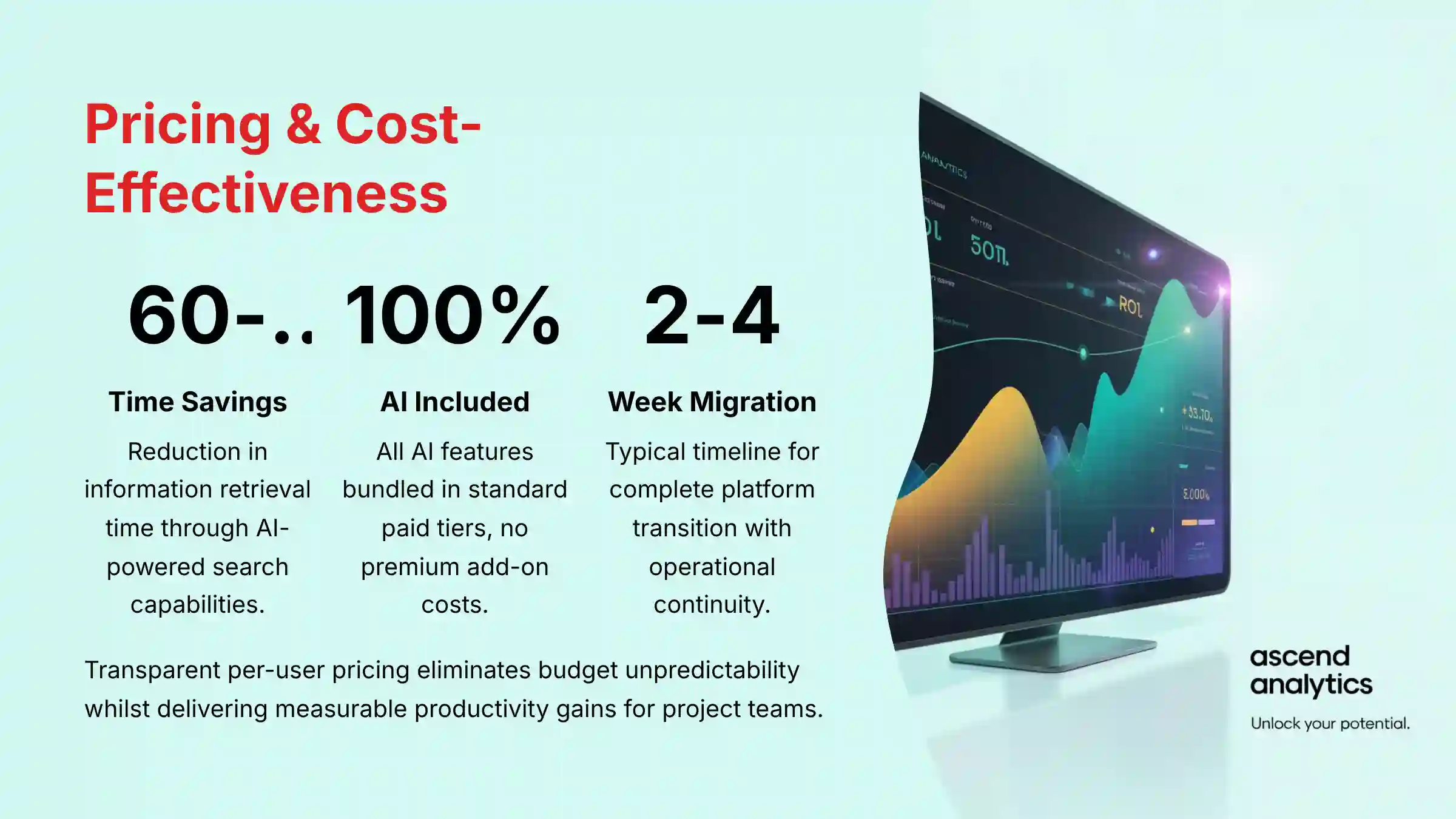
Slite employs a transparent, per-user monthly pricing model that includes AI capabilities within standard paid tiers, distinguishing it from competitors that charge premium rates for AI functionality as separate add-ons. This pricing approach simplifies budget planning for project managers and provides predictable cost scaling as teams grow.
The Free Plan accommodates small teams or trial evaluations with core documentation features but limits document capacity and excludes advanced AI capabilities. This tier allows project teams to evaluate the platform’s interface and basic functionality before committing to paid subscriptions.
The Standard Plan represents the primary value proposition for professional project teams, including:
- Unlimited document creation and storage
- Advanced collaboration features and commenting
- Full access to Slite’s AI suite including “Ask” functionality
- Automated summarizations and content suggestions
- Intelligent writing assistance and grammar checking
- Integration capabilities with project management tools
This tier typically provides the optimal cost-benefit ratio for most project and product management use cases.
Premium/Enterprise Plans add advanced security features essential for larger organizations:
- SAML-based Single Sign-On (SSO) integration
- Enhanced administrative controls and user management
- Dedicated customer success management
- Priority support with guaranteed response times
- Advanced audit logs and compliance reporting
- Custom integration development support
These tiers address the compliance and governance requirements common in enterprise project environments.
ROI calculation for project teams should factor in productivity gains from:
- Reduced information search time (60-70% improvement)
- Decreased meeting overhead for status updates
- Improved team onboarding efficiency
- Enhanced decision-making through better context access
- Reduced documentation maintenance overhead
Conservative estimates suggest that AI-powered search can reduce information retrieval time by 60-70%, translating to significant capacity gains for project teams spending substantial time answering repetitive questions or searching for project context.
Cost comparison with alternatives should include the total cost of ownership, considering that Slite’s focused approach often reduces the need for multiple specialized tools. Teams using Confluence plus separate AI writing tools, for example, may find Slite’s integrated approach more cost-effective and operationally efficient.
The bundled AI pricing model eliminates concerns about usage-based AI costs that can create budget unpredictability with some enterprise software platforms, making it easier for project managers to justify and maintain consistent tooling investments. For comprehensive pricing comparisons and additional FAQ resources, visit our detailed Slite FAQs section.
This comprehensive FAQ guide provides project and product managers with the essential knowledge needed to evaluate and implement Slite’s AI-powered knowledge management capabilities. For ongoing insights into AI tools for project management, continue exploring our resources on Best AI Project Hub.

Leave a Reply